Traditional Kerala Pickles: Flavors, Ingredients and Food Culture
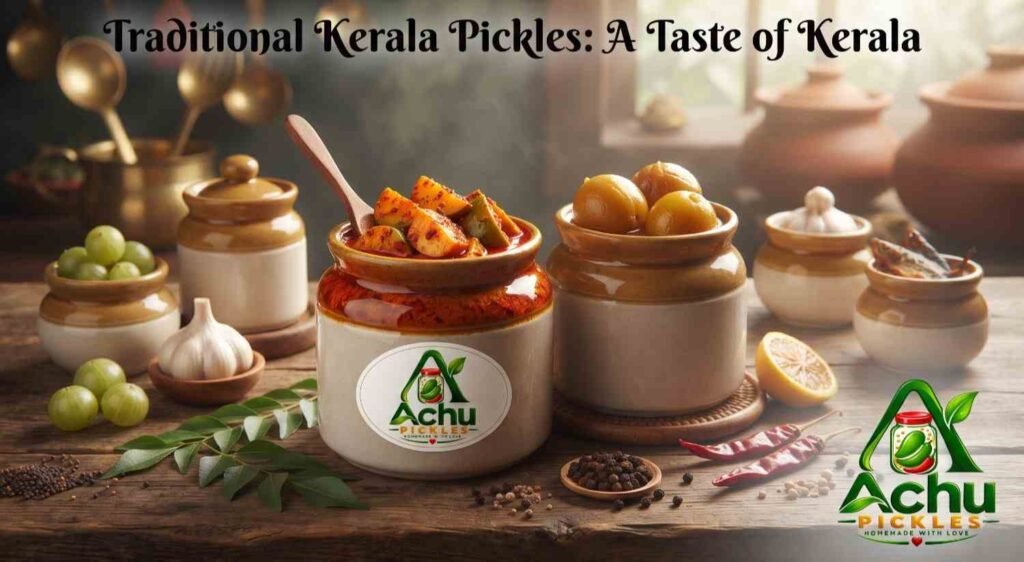
Kerala is known for a food culture that brings together fresh ingredients, aromatic spices, seasonal produce and traditional cooking methods. Among the many foods that represent the unique character of Kerala cuisine, traditional Kerala pickles have a special place. Their combination of sour, salty, spicy and aromatic flavors can add a distinctive touch to an everyday meal.
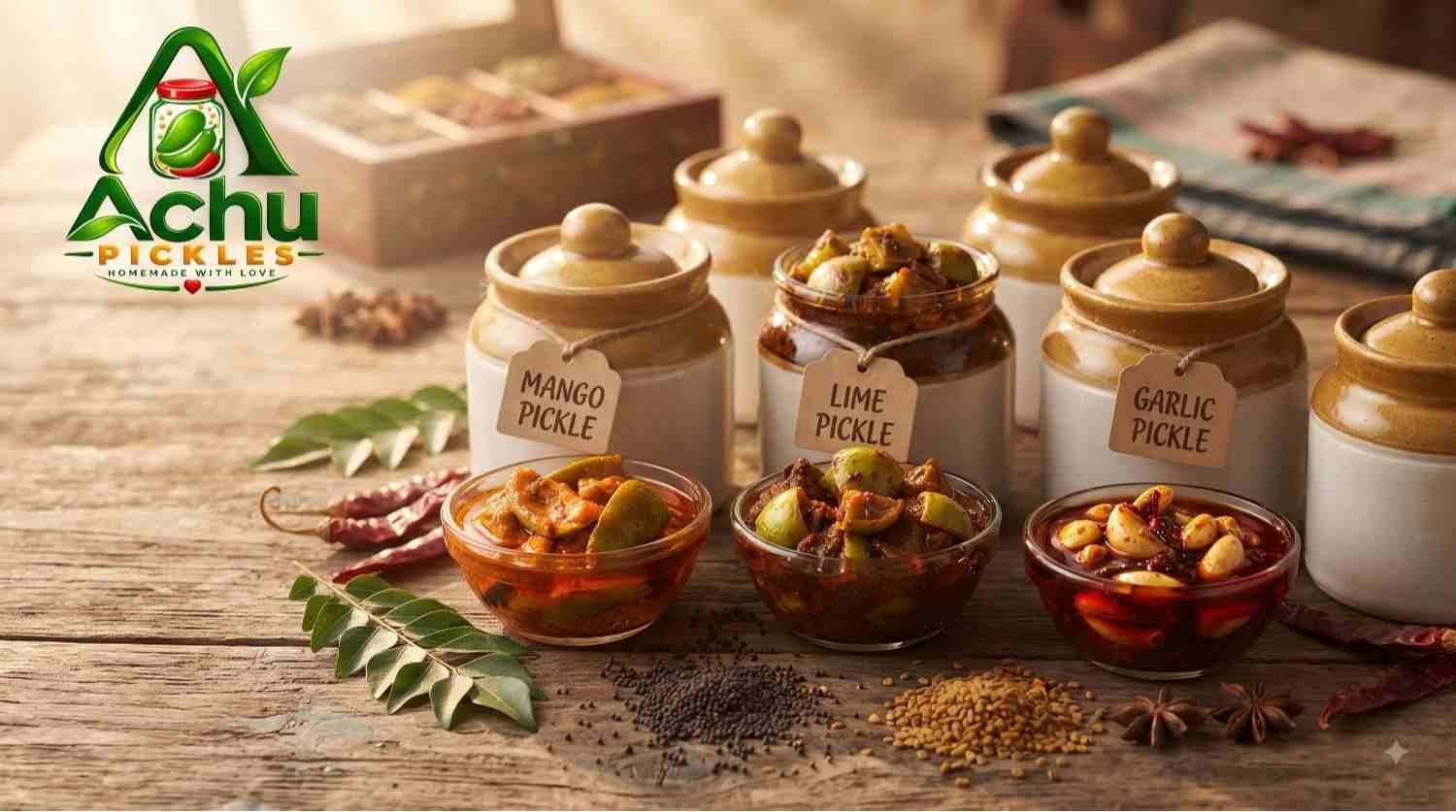
From homemade mango pickle to tangy lemon and lime varieties, Kerala has a wide range of pickles prepared using different ingredients and regional preferences. These pickles are enjoyed with rice, traditional meals and festive Sadya. Kerala Tourism also lists pickles among the popular accompaniments served as part of Kerala’s traditional cuisine.
But Kerala pickles are more than just a side dish. They are connected with home cooking, seasonal ingredients, family recipes and the culinary traditions passed from one generation to another.
In this article, let’s explore the world of traditional Kerala pickles, their ingredients, popular varieties, flavors and their role in Kerala food culture.
What Are Traditional Kerala Pickles?
Traditional Kerala pickles are preserved food preparations made using ingredients such as raw mangoes, lemons, limes, ginger, garlic, chillies and other seasonal produce. Depending on the recipe, ingredients are combined with salt, spices and oil to create a distinctive balance of flavors.
The exact preparation can vary from one household or region to another. Some families may prefer a spicier pickle, while others may enjoy a stronger sour or salty flavor.
This variety is one of the interesting features of Kerala homemade pickles. A recipe may have a familiar foundation while still carrying the personal touch of the family that prepares it.
Kerala’s food traditions are closely connected with the state’s agricultural produce and spice heritage. Rice, coconut, ginger and a range of spices are important elements of Kerala cuisine, contributing to its recognizable flavors.
Why Are Kerala Pickles So Popular?
One reason for the popularity of authentic Kerala pickles is their ability to complement many everyday foods.
A small serving of pickle can bring a strong combination of spice, tanginess and saltiness to a simple meal. This makes pickle a useful accompaniment rather than a dish that needs to be eaten on its own.
Kerala pickles are commonly associated with meals containing rice and are also served as part of festive food traditions. Kerala Tourism’s description of the traditional Sadya includes mango and lime pickles among the accompaniments served on the banana leaf.
The popularity of mango pickle also extends beyond Kerala. Kerala Tourism reported that mango pickle was among the highly searched food and drink recipes in Google’s 2024 search trends, showing continuing interest in this traditional food.
Popular Kerala Pickle Varieties
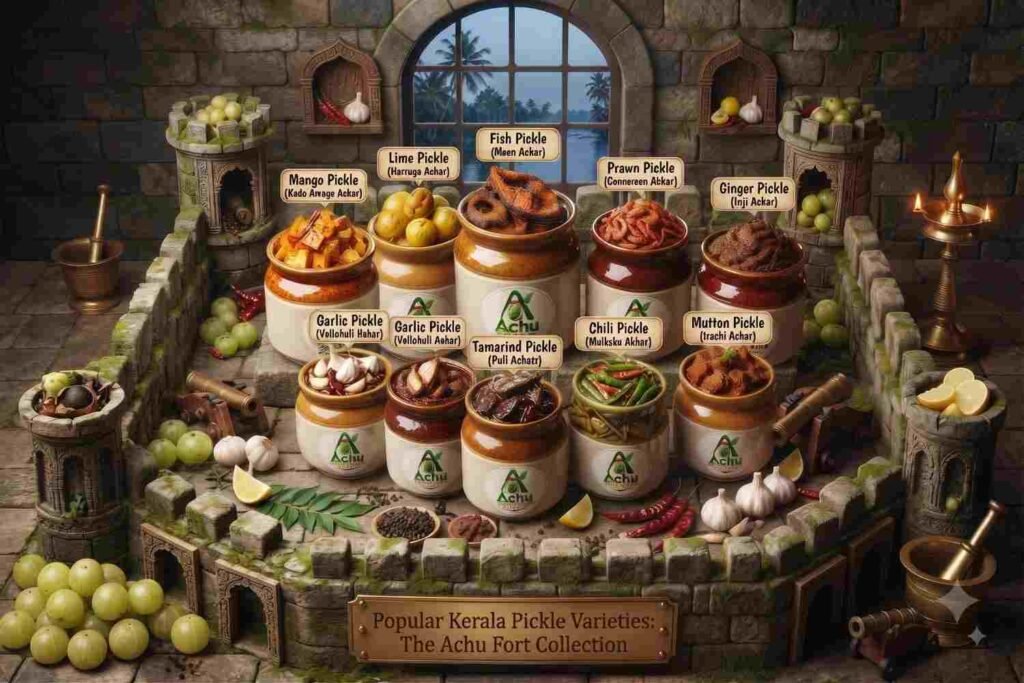
One of the best things about Kerala pickle varieties is the range of ingredients that can be used.
1. Mango Pickle
Mango pickle is perhaps one of the most recognizable varieties of traditional Kerala pickles.
Made with raw mangoes, spices, salt and oil, Kerala-style mango pickle is known for its bold combination of sourness, heat and spice. The traditional Kerala Tourism recipe includes mango, chilli, mustard seeds, fenugreek, curry leaves, asafoetida and gingelly oil.
The natural sourness of raw mango works particularly well with the spicy seasoning. It is commonly served with rice and forms part of traditional Kerala meals.
2. Lemon and Lime Pickle
Lemon and lime pickles are another popular category of homemade Kerala pickles.
Their natural citrus flavor provides a refreshing sourness, while chilli and spices add depth. Lemon-based pickles can be enjoyed with rice and are also commonly associated with festive meals.
The flavor can vary according to the recipe, making homemade preparation particularly interesting.
3. Dates and Lemon Pickle
Dates and lemon create an interesting combination of sweet, sour and spicy flavors.
The sweetness of dates can balance the tanginess of lemon while spices add a traditional Kerala touch. This type of pickle is an example of how different ingredients can be combined to create unique Kerala pickle flavors.
4. Garlic Pickle
Garlic is another ingredient used in many Indian pickle traditions. A garlic-based pickle can have a strong, savory character combined with chilli and spices.
For people who enjoy bold flavors, garlic pickle can be an interesting accompaniment to rice and other meals.
5. Ginger Pickle
Ginger-based preparations are also connected with Kerala’s traditional food culture.
Kerala’s Sadya includes several tangy and spicy accompaniments, demonstrating how contrasting flavors are intentionally combined in the traditional meal.
Ginger-based pickle or accompanying preparations can add a distinctive spicy and aromatic note to a meal.
Ingredients Commonly Found in Kerala Pickles
The character of a pickle depends heavily on its ingredients.
Some commonly used ingredients in traditional Kerala pickles include:
- Raw mango
- Lemon
- Lime
- Ginger
- Garlic
- Green chilli
- Red chilli
- Mustard seeds
- Fenugreek
- Curry leaves
- Asafoetida
- Salt
- Gingelly oil or other cooking oils
- Dates in selected recipes
The combination changes depending on the type of pickle and the recipe being followed.
For example, Kerala Tourism’s mango pickle recipe combines raw mango with chilli, mustard, fenugreek, curry leaves, asafoetida and gingelly oil.
These ingredients contribute different characteristics. Mango and lemon provide acidity and tanginess, chillies contribute heat, mustard and fenugreek add distinctive spice notes, while oil helps bring the seasoning together.
What Makes Kerala Pickles Different?
The uniqueness of authentic Kerala pickles comes from the balance of ingredients.
Kerala cuisine is famous for its use of spices, and this influence can clearly be seen in pickle preparation. Rather than relying on a single flavor, traditional recipes often combine several tastes.
A good pickle may bring together:
Sour + Spicy + Salty + Aromatic
This combination makes even a simple serving of rice more interesting.
The use of seasonal produce is another important aspect. Raw mangoes, lemons and other ingredients can be transformed into flavorful accompaniments, allowing traditional recipes to make use of ingredients available at different times of the year
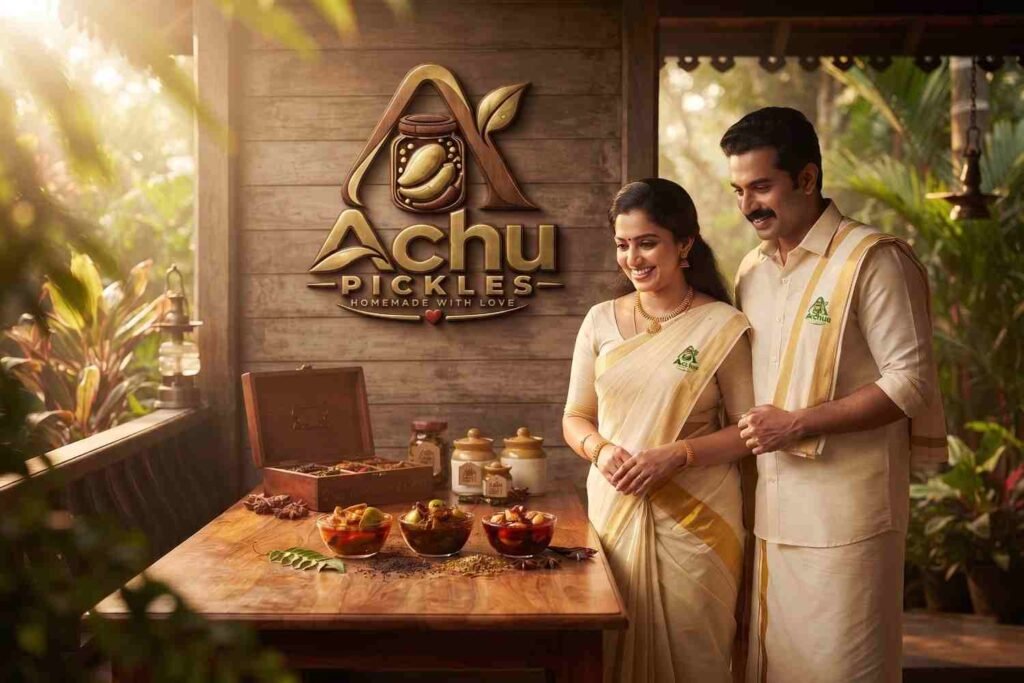
Traditional Kerala Pickles and Kerala Food Culture
Food in Kerala is closely connected with family, festivals and community celebrations.
The most famous example is Kerala Sadya, a traditional vegetarian feast served on a banana leaf. Sadya includes numerous dishes with different flavors and textures, and pickles are among the accompaniments.
Kerala Tourism describes Sadya as a traditional feast served during celebrations and notes that pickles such as ginger, mango and lime contribute to the meal.
The placement of different dishes on the banana leaf also forms part of the traditional dining experience. Pickles are served alongside other accompaniments, helping create the distinctive variety of tastes associated with Sadya.
This is why traditional Kerala pickles are not simply preserved foods. They are also part of the state’s culinary identity.
Homemade Kerala Pickles and Family Recipes
One of the most appealing aspects of Kerala homemade pickles is the connection with family recipes.
Many traditional recipes are passed from parents and grandparents to younger generations. Small changes in the amount of spice, salt, oil or other ingredients can create a completely different flavor.
This makes homemade pickle recipes personal.
Two families may prepare mango pickle using similar ingredients but still produce noticeably different results. One may prefer more chilli, another may prefer stronger sourness, and another may use a particular spice combination.
That personal touch is what makes authentic homemade pickles special.
Traditional Pickles With Everyday Meals
You don’t need a large feast to enjoy Kerala pickle.
A simple combination of steamed rice and a traditional side dish can be complemented by a small serving of pickle. It can also accompany meals featuring curd rice, kanji and other familiar foods.
Kerala’s food culture demonstrates how different flavors can be combined within one meal. Pickles contribute a sharp and spicy element that contrasts with milder dishes.
For many people, this combination creates a comforting connection with traditional Kerala home cooking.
The Importance of Seasonal Ingredients
Seasonality has always been an important part of traditional food preparation.
Raw mangoes, for example, become an important ingredient for mango pickle when they are available. Instead of allowing seasonal produce to go unused, traditional food practices provide ways to preserve and enjoy those ingredients.
This connection between agriculture and food is an important part of Kerala’s culinary heritage. Kerala’s food culture reflects its agricultural traditions, coastal influences and long relationship with spices and locally available ingredients.
As a result, traditional Kerala pickles represent more than flavor. They also reflect a practical and creative approach to food preparation.
How to Choose Good Homemade Pickles
If you are looking for homemade pickles online, consider a few basic factors before choosing a product.
Look at the ingredients
Choose pickles made with clearly listed ingredients and recognizable spices.
Consider the flavor you prefer
If you enjoy tangy flavors, mango or lemon-based varieties may be suitable. If you prefer more complex flavors, you can explore combinations such as dates and lemon.
Explore different varieties
Don’t limit yourself to one pickle. Exploring different Kerala pickle varieties is a simple way to discover new flavors.
Check the product information
When purchasing packaged homemade pickles, look for information about ingredients, storage, quantity and best-before dates.
Choose a trusted homemade brand
A brand that focuses on traditional recipes and quality ingredients can make it easier to explore Kerala-style pickles.
Why Traditional Kerala Pickles Still Matter Today
Modern food habits are changing, but traditional flavors continue to attract people who want a connection with regional cuisine.
The popularity of mango pickle in recent search trends is one indication of the continued interest in traditional Indian food. Kerala Tourism noted that mango pickle ranked highly in Google’s 2024 food and recipe searches.
For people who grew up eating Kerala food, pickle can bring back memories of family meals and celebrations. For those discovering Kerala cuisine for the first time, it offers an easy introduction to the bold flavors of the region.
This combination of tradition and accessibility gives traditional Kerala pickles a lasting place in modern kitchens.
Traditional Kerala Pickles: A Taste of Kerala
From spicy mango pickle to tangy lemon pickle, Kerala offers an exciting range of flavors. Each variety reflects the ingredients, spices and cooking traditions that make Kerala cuisine distinctive.
Traditional Kerala pickles are enjoyed with everyday meals, festive Sadya and family gatherings. They represent the creativity of homemade cooking while preserving flavors connected with Kerala’s culinary heritage.
Whether you are already familiar with Kerala pickles or trying them for the first time, exploring different varieties can be a delicious way to experience the food culture of Kerala.
At Achu Pickles, the traditional spirit of Kerala homemade pickles can be brought to today’s table through carefully prepared pickle varieties inspired by the flavors of Kerala.
If you are looking to buy homemade pickles online, exploring authentic Kerala-style varieties can be a simple way to enjoy these traditional flavors at home.